North Indian Wedding Rituals Step by Step — Complete Guide
North Indian weddings are among the most elaborate, joyful, and richly ceremonial celebrations in the world. Spanning multiple days across Punjab, Uttar Pradesh, Haryana, Rajasthan, Delhi, and Madhya Pradesh, they follow a sequence of rituals that weave together family, faith, community, and centuries of cultural inheritance.
The Full Sequence
Roka → Sagai → Tilak → Haldi → Mehendi → Sangeet → Baraat → Milni → Jai Mala → Pheras → Sindoor → Mangalsutra → Vidaai → Griha Pravesh
Step 1: Roka — The Families Agree
The Roka is where everything begins — not with fanfare, but with intimacy. Both families come together and the parents formally agree they want this match. The girl’s family places a tilak on the boy’s forehead, sweets are shared, and a small Shagun is exchanged. From this moment, neither family is “looking” anymore.
Roka is small — usually 10 to 30 people from close family only.
Step 2: Sagai (Engagement) — Rings and Blessings
The Sagai formalises what the Roka began. In a ceremony usually led by a pandit, the couple exchanges rings in front of both families. This is the first major gathering — anywhere from 50 to 200+ guests. Shagun flows generously, and the families often host a dinner alongside the ring ceremony.
Step 3: Tilak Ceremony — The Groom Is Accepted
Some families hold a dedicated Tilak ceremony separate from the engagement. The bride’s family visits the groom’s home with gifts and sweets. The bride’s brother applies a tilak to the groom’s forehead. This ceremony formalises the bride’s family’s acceptance of the groom.
Step 4: Haldi — Turmeric and Transition
Held at both homes separately on the day before the wedding. Female relatives apply a paste of turmeric, sandalwood, and rose water to the bride’s face, arms, and feet, singing folk songs and blessing her.
After Haldi, the bride traditionally does not leave the house or meet the groom until the wedding — she is in a liminal, sacred state.
Step 5: Mehendi Night — Henna and Celebration
A professional Mehendi artist applies intricate bridal henna to the bride’s hands and feet. The designs are elaborate — palms, backs of hands, forearms, feet and ankles are all covered. The groom’s name is hidden within the design. Female guests and relatives also get Mehendi applied.
Step 6: Sangeet — The Night of Music
The Sangeet is the combined celebration of both families — singing, dancing, and performing for each other. In modern families, it features professional choreography and themed performances. The Sangeet is where family bonds are visible.
📱 Coordinate Every Ceremony with Nyota Create a separate event for each ceremony. Manage guest lists, track RSVPs, and record Shagun from Roka to Vidaai — all in one private, secure app. Download free at thenyota.app →
Step 7: Baraat — The Groom Arrives
On the wedding day, the groom departs for the venue with his entire family in a procession — the Baraat. A dhol drummer and often a brass band leads. The groom rides a decorated white horse (or arrives in a luxury car). Male relatives and friends dance in front of the procession.
Step 8: Milni — The Families Meet
At the venue, the bride’s family welcomes the groom’s family. Corresponding relatives from both families are paired and exchange garlands. The Milni is where two families become one.
Step 9: Jai Mala
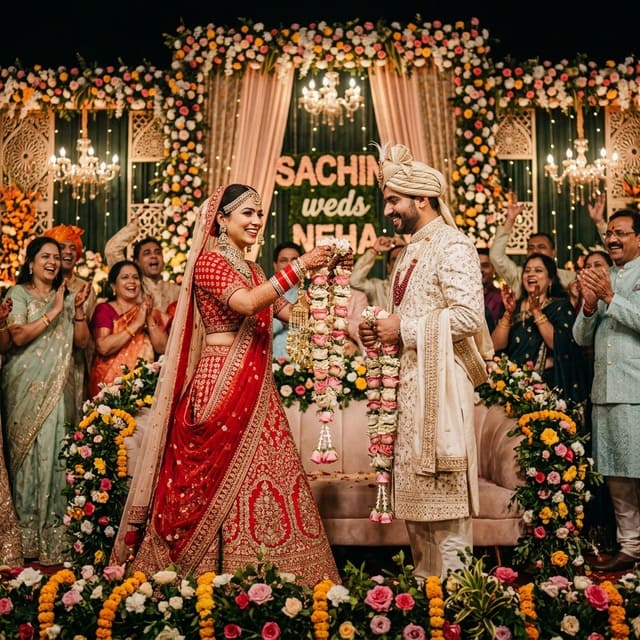
The groom enters the mandap and the bride is brought forward. They exchange flower garlands — the Jai Mala — in a ceremony filled with gentle teasing. The bride’s brothers lift her up so the groom cannot reach to garland her. The garlands are finally exchanged amid laughter and cheers.
Step 10: Pheras — The Sacred Seven Rounds
Around the sacred fire, the couple takes seven rounds with the priest reciting mantras. Each round carries a specific vow. After the seventh round, they are wed in the eyes of their tradition, their community, and their god.
Step 11: Sindoor and Mangalsutra
The groom applies sindoor to the bride’s hair parting for the first time. He then ties the mangalsutra around her neck. In that moment, her status in the world has changed.
Step 12: Vidaai — The Farewell
The Vidaai is the most emotionally charged moment of any Indian wedding. The bride throws rice over her head as she walks to the car. Her mother and sisters weep. Her father struggles to hold himself together. She enters the car and the door closes.
Step 13: Griha Pravesh — The New Home
When the bride arrives at her new home, she performs the Griha Pravesh. She kicks a pot of rice over the threshold with her right foot, enters with the right foot forward, and performs a brief puja. The wedding is complete — and the new family has begun.
Learn More: Read our guide to Difference Between Roka and Engagement →
Enjoyed this article?
Download Nyota to experience the modern way of gifting yourself.