What Happens in the Haldi Ceremony? Rituals, Meaning & Traditions
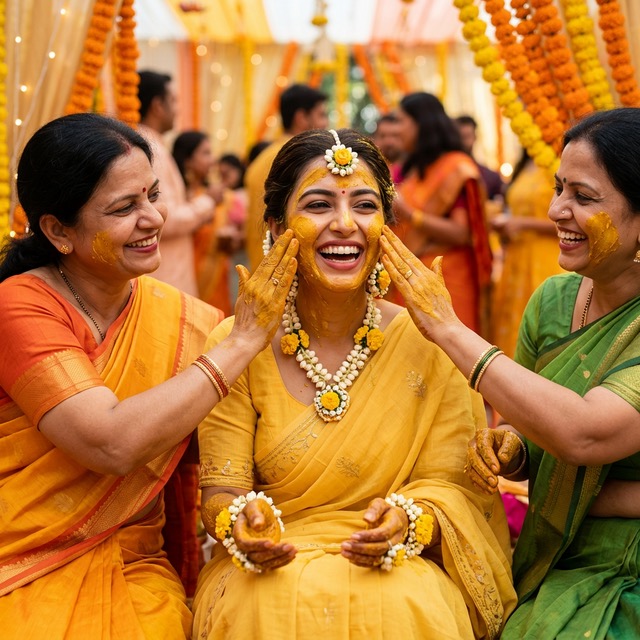
Walk into a home on the morning of a pre-wedding Haldi ceremony and you will find it transformed. The floor is covered with floral petals. Aunties are singing folk songs in the courtyard. Someone has covered the furniture with old bedsheets — because turmeric stains everything it touches, and that is entirely the point.
The Direct Answer
In the Haldi ceremony, a paste of turmeric, sandalwood, and rose water is applied to the bride and groom by family members at their separate homes, usually the day before the wedding. It is believed to purify, protect, and beautify the couple.
The Meaning of Haldi
Haldi (हल्दी) is turmeric — the brilliant golden spice that has been at the centre of Indian ritual, cooking, and medicine for millennia. In Ayurveda, turmeric is prized for its antiseptic, anti-inflammatory, and skin-brightening properties. In Vedic tradition, it is believed to purify the body and ward off negative energy.
Applying Haldi before a wedding serves both purposes simultaneously. The couple receives a natural skin treatment that genuinely gives them a glow on their wedding day — and they are spiritually purified before stepping into the sacred space of the ceremony.
The Haldi Paste — What Goes Into It
The basic Haldi paste: raw turmeric powder or freshly ground turmeric root, mixed with rose water to form a paste. Many families add:
- Sandalwood powder — for fragrance and additional skin benefits
- Gram flour (besan) — as a gentle exfoliant
- Milk or cream — for softening
Who Applies Haldi to the Bride?
The Haldi ceremony at the bride’s home is primarily a female gathering. The first application is by the most auspicious woman in the family — typically the bride’s mother or a senior married woman. After the first application, close female relatives join in — sisters, aunts (maami, bua, chachi), and close female friends.
What Happens at the Bride’s Haldi
The bride sits on a low wooden stool (chowki) or decorated platform. She wears old clothes — everything will be stained. Her mother begins with a prayer and the first application of paste to her forehead, cheeks, arms, and feet.
Folk songs specific to the Haldi ceremony are sung throughout — Sohar songs, Shadi songs, songs about the bride’s departure. The lyrics are often emotional, speaking about the bride’s upcoming farewell. Some aunties cry while applying the paste. The bride may cry too. The laughter and tears are both welcome.
The Groom’s Haldi — A Different Energy
At the groom’s home, the Haldi ceremony has a noticeably different energy. His mother begins with the first application, then brothers, male cousins, and friends join in — often applying far more paste than necessary, sometimes pouring it over his head. It is common for the groom’s Haldi to be combined with music and feel like a mini-Sangeet.
Why the Bride Cannot Leave After Haldi
After Haldi, the bride traditionally stays at home and does not go out until the wedding. This is not just custom — it is a spiritual marker. The bride has been set apart, made liminal. She is in transition between her identity as a daughter and her identity as a wife.
Beauty note: The Haldi glow is real. Raw turmeric is a genuine skin brightener — brides who have their Haldi ceremony the day before their wedding often report that their skin looks noticeably more radiant on the wedding day.
📱 Manage Your Haldi Guest List Separately Haldi is intimate — 20 to 50 people, close family only. Nyota lets you create a separate Haldi event with its own guest list, distinct from the larger wedding and Sangeet lists. Download free at thenyota.app →
Haldi in Different North Indian Communities
Punjabi families: The Haldi is often called “Vatna” and the paste may include mustard oil and gram flour. The Vatna ceremony can be held over multiple days.
Rajasthani families: The ceremony may involve more elaborate floral decoration and a larger gathering of female relatives.
UP and Bihar families: The singing component is particularly emphasised — folk songs are central to the ritual.
Learn More: Read our guide to Mehendi Ceremony Traditions →
Enjoyed this article?
Download Nyota to experience the modern way of gifting yourself.