Order of Indian Wedding Rituals — Complete Ceremony Sequence
An Indian wedding is not a single event — it is a sequence of distinct ceremonies, each with its own rituals, participants, emotional tone, and spiritual meaning. Understanding the order helps every family member participate more fully.
The Complete Sequence
The typical North Indian Hindu wedding follows this order:
Roka → Engagement (Sagai) → Tilak → Haldi → Mehendi → Sangeet → Baraat → Milni → Jai Mala → Pheras → Sindoor → Vidaai → Griha Pravesh
South Indian and other regional weddings follow different sequences.
Pre-Wedding Ceremonies
1. Roka — The Informal Agreement
Roka is where the journey begins. Both families meet — usually at the girl’s home — and the parents agree the match is final. Sweets are exchanged, a small Shagun is given, and both families “stop looking.” It is intimate — 10 to 30 people, close family only.
2. Engagement / Sagai — The Formal Declaration
The Sagai is the public announcement. Rings are exchanged in a ceremony led by a pandit, with a larger gathering of family and friends. Shagun flows generously at Sagai — it is often the first major Shagun event in the wedding cycle.
3. Tilak Ceremony
In many North Indian families, the Tilak ceremony follows engagement. The bride’s family visits the groom’s home and applies a tilak to the groom’s forehead — formally accepting him as the incoming family member.
4. Haldi Ceremony
Held at both homes separately, usually the day before or morning of the wedding. A turmeric paste is applied to the bride and groom by family members. After Haldi, the bride traditionally stays at home until the wedding.
5. Mehendi Ceremony
Mehendi night is one of the most anticipated events — an evening of henna, music, singing, and dancing. Professional Mehendi artists apply intricate designs to the bride’s hands and feet. The groom’s name is traditionally hidden within the design.
6. Sangeet
The Sangeet is the combined celebration of both families — dancing, singing, and performing for each other. It is often the loudest and most joyful night of the wedding sequence.
📱 Manage Guest Lists Across Every Ceremony Each ceremony has its own guest list. Nyota lets you create separate events — Haldi, Sangeet, Wedding, Reception — with their own guests, RSVP tracking, and Shagun records. Download free at thenyota.app →
The Wedding Day
7. Baraat — The Groom’s Procession
On the wedding day, the groom’s family assembles for the Baraat — a procession to the venue with a brass band, decorated horse or car, and dancing family members.
8. Milni — The Meeting of Families
At the venue, the bride’s family welcomes the groom’s family in the Milni. Corresponding relatives from both sides are introduced and garland each other.
9. Jai Mala / Varmala
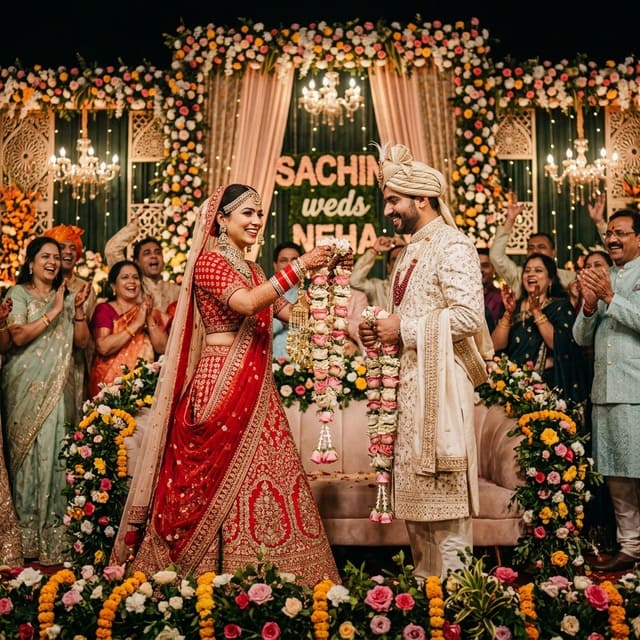
The bride and groom exchange flower garlands in front of all guests — formally accepting each other. This is often a playful ceremony, with brothers of the bride lifting her up to prevent the groom from garlanding her.
10. Pheras — The Sacred Seven Rounds
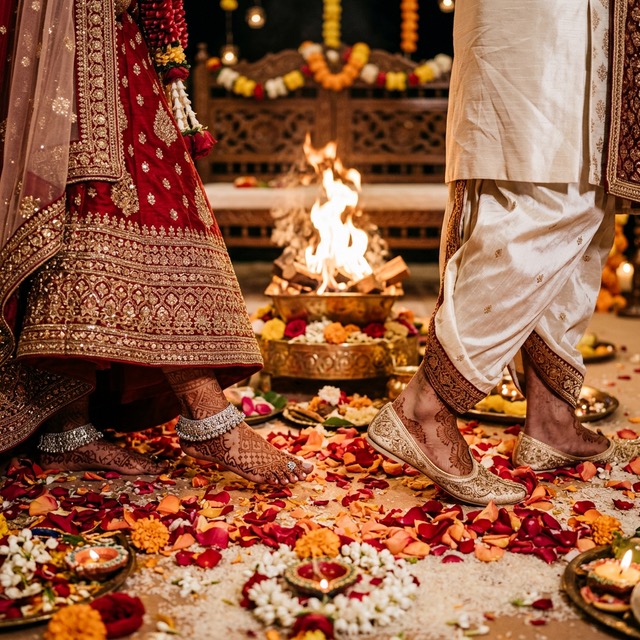
The Pheras (Saat Phere) are the spiritual core of the Hindu wedding. The couple walks seven rounds around the sacred fire, each round accompanied by a specific vow. After seven rounds, the couple is considered married.
11. Sindoor and Mangalsutra
Following the Pheras, the groom applies sindoor to the bride’s hair parting for the first time. He then ties the mangalsutra around her neck. These two acts formally complete the marriage ceremony.
12. Vidaai — The Farewell
The Vidaai is the bride’s farewell from her parental home. She throws rice over her shoulder as she leaves — symbolically repaying her debt to her natal home. Tears, blessings, and long embraces mark this moment.
After the Wedding: Griha Pravesh
When the bride enters her new home, a Griha Pravesh ceremony is often performed. She kicks a pot of rice over the threshold with her right foot, enters with the right foot forward, and is welcomed with a full puja. This marks the beginning of her life as Grihini (lady of the house) in her new family.
Learn More: Read our guide to North Indian Wedding Rituals Step by Step →
Enjoyed this article?
Download Nyota to experience the modern way of gifting yourself.