Why Is ₹1 Added in Shagun? The Real Reason Behind the Extra Rupee
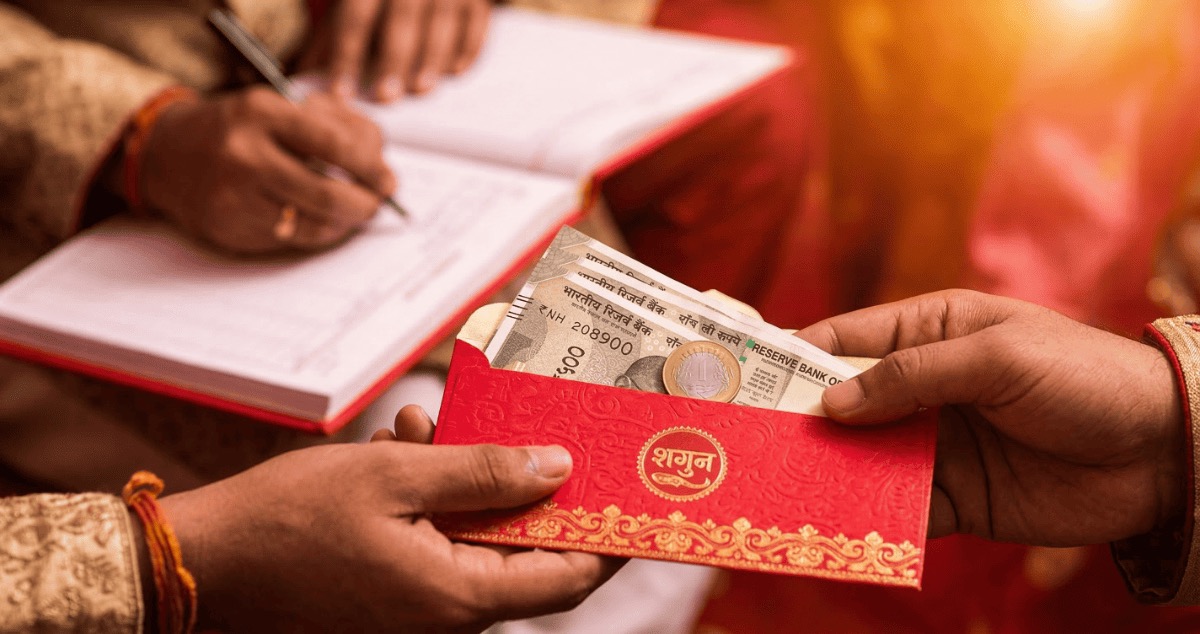
Walk into any Indian wedding and you will notice it instantly — the Shagun envelope handed over contains ₹501, or ₹1,001, never ₹500 or ₹1,000. There is always that single extra rupee. This small coin carries one of Indian culture’s most layered traditions.
In this article Why the ₹1 is added · The numerology behind odd numbers · The social contract it represents · Spiritual significance · Regional variations · How this shapes Shagun recording
The Mathematics of Auspiciousness
In Vedic numerology, numbers carry vibrations. Even numbers are considered “complete” — they can be divided equally, making them symbols of endings and closed cycles. Odd numbers, by contrast, cannot be divided cleanly. They are indivisible — and indivisibility is the quality most prized in relationships.
When you give ₹501 instead of ₹500, you are encoding a philosophy into a financial transaction: this relationship cannot be neatly closed out.
The Direct Answer
The extra ₹1 makes the Shagun total an odd number. In Indian tradition, odd numbers represent ongoing, indivisible bonds — an open relationship that is not yet finished. An even number signals completion and closure. The single rupee says: “Our relationship continues. I will give again.”
The Social Contract Hidden in One Coin
Indian family events run on reciprocity. When you give Shagun at someone’s wedding, you are not making a one-time donation — you are making an entry in a long-running mutual ledger. The host family records what you gave. When your own family holds a wedding or ceremony, they will give back in kind — and often a little more, because relationships grow.
The ₹1 is the physical embodiment of that ledger remaining open. An even ₹500 could theoretically “settle” a transaction. The ₹501 cannot be settled evenly — it leaves a deliberate imbalance, a reason to continue the exchange.
Think of it this way: The ₹1 is a social IOU encoded in tradition. It says: “You cannot close this account because it is not meant to be closed. We are family. We keep giving.”
The Spiritual Dimension: What the Number 1 Represents
In Hindu philosophy, the number 1 (Ek) carries profound significance. It represents Brahman — the singular, undivided source of all creation. Adding 1 to a gift is an act of invoking the divine, of saying: “I offer this with the blessing of the one universal force.”
This is also why many auspicious amounts in Indian culture are structured around 1 — ₹1,001 for important Shagun, ₹11 for small blessings, ₹101 for temple offerings. The 1 is always present as a marker of the sacred.
Why Giving an Even Amount Is Considered Inauspicious
In most North Indian Hindu families, presenting ₹500 flat in a Shagun envelope is quietly considered bad form. The even number feels transactional, closed, and inadvertently signals that the giver considers the relationship “settled.”
In communities where this tradition runs deep — Rajasthani, Punjabi, UP, Haryana families — the convention is so ingrained that giving even amounts feels like a social slight. The ₹1 is the difference between a gift and a blessing.
Regional Variations
The ₹1 convention is most strongly observed in North and Central India — Punjab, Haryana, Uttar Pradesh, Rajasthan, Madhya Pradesh, and Bihar. In South India, gifting norms vary by community and some traditions use different symbolic logic. In Maharashtra and Gujarat, ₹101 and ₹501 conventions are common.
The core principle — that Shagun should carry auspiciousness, not just money — remains universal. The expression simply differs by region.
How This Tradition Shapes Shagun Recording
The ₹1 convention has a practical consequence: every Shagun amount is distinct. ₹501, ₹1,001, ₹5,001, ₹11,001 — these odd amounts are immediately recognisable as Shagun, not accidental transfers. This made it easier for families maintaining the traditional Red Notebook (Vyavahar Book) to confirm amounts at a glance.
The person managing the notebook during a wedding — often called the Munshi — would sit near the Shagun table, recording each guest’s name, relationship, and the exact amount given. That record became the family’s reciprocal reference for decades.
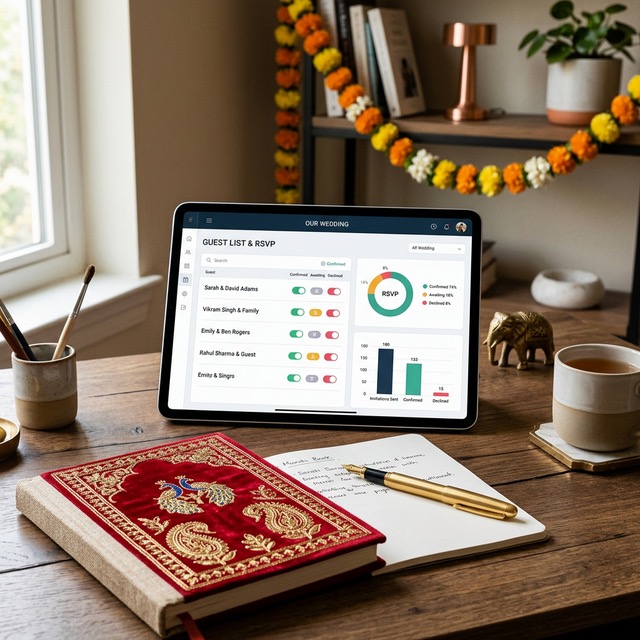
📱 Track Shagun Digitally with Nyota Nyota helps Indian families record every Shagun — the exact amount, the giver’s name, and the event — so you never lose the reciprocal history your family depends on. Download free at thenyota.app →
Common Questions
Does the extra ₹1 have to be a coin or can it be in notes? Either works. Many families fold a ₹1 coin separately in the envelope alongside notes. The denomination form does not matter — only that the total is odd.
What if I forget and give an even amount? No one will confront you, but if you realise it soon after, adding a ₹1 coin when you next see the host family is a gracious correction that will be warmly noticed.
Does the same convention apply to digital UPI Shagun? Yes — and increasingly, Indian families are sending Shagun via UPI. Transfer ₹1,001 not ₹1,000, ₹5,001 not ₹5,000. The tradition survives the medium.
The Single Rupee That Holds Everything Together
It is remarkable that a single ₹1 coin — worth almost nothing in monetary terms today — carries so much cultural weight. It is a symbol of continuity, a marker of the sacred, a social promise, and a numerological blessing all at once.
The next time you tuck that extra rupee into a Shagun envelope, know that you are not just following convention. You are participating in a tradition that has bound Indian families together across generations — one odd number at a time.
Learn More: Read our guide to How Much Shagun to Give at an Indian Wedding →
Enjoyed this article?
Download Nyota to experience the modern way of gifting yourself.